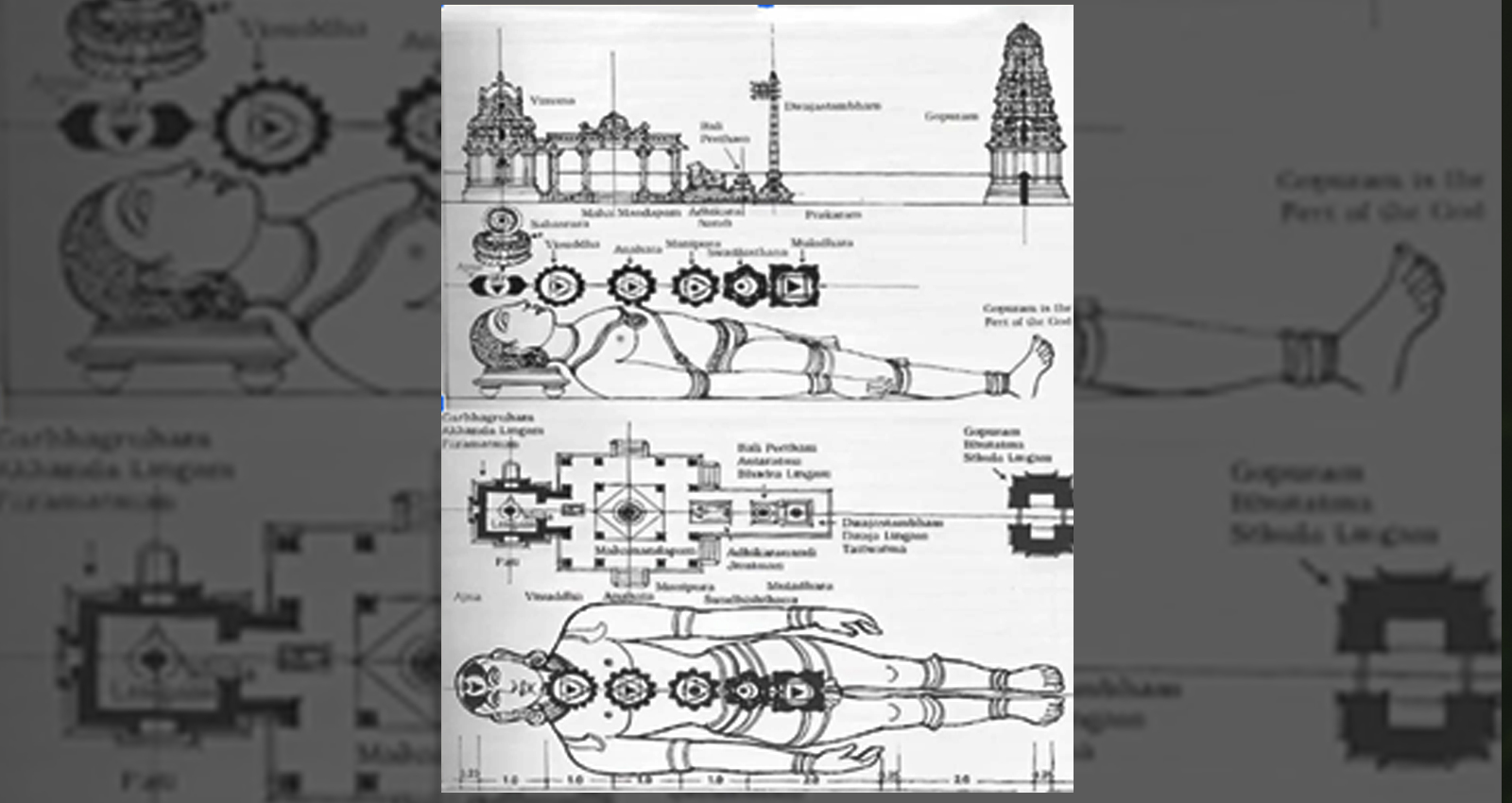
Temple science refers to the sophisticated blend of physics, engineering, astronomy, mathematics, and spiritual principles embedded in ancient temple architecture, particularly Hindu temples, focusing on energy generation/storage (magnetic/electromagnetic), precise acoustic/optical design for resonance, and cosmological alignment, using materials like panchalogam (five metals) and geometry for spiritual efficacy. It’s not just religious ritual but applied knowledge for creating sacred spaces that amplify positive energies and connect with cosmic forces, as seen in South Indian temple designs.
Temples architecture based on seven chakras activation:
The Spirituality Behind Kundalini Activation
Kundalini activation is not a stream of energy. It is a long-term process that has been referred to in Hindu scriptures like the Upanishads and Tantras.
In those, it is mentioned that when this dynamic energy is activated, the person becomes more energetic and harmonised towards the divine.
It also removes blocks, cleansing the soul and providing an entry to higher knowledge.
In contrast to usual spiritual practices, Kundalini awakening connects the most significant level of consciousness. It is a very strong but holy practice that benefits you in spiritual and personal growth.
Perceived Benefits:
Regular visits and participation in temple activities are believed to lead to:
- Metal clarity and emotional balance
- The absorption of positive energy which counteracts daily energy loss.
- Inner peace and a deeper connection with the divine.
The Chidambaram Nataraja Temple
The Chidambaram Nataraja Temple integrates profound scientific and yogic principles, acting as a human body map with its structure representing 72,000 nerves (nails on the roof), 21,600 breaths (gold sheets), and nine body openings (gateways). It’s situated on the Earth’s magnetic equator, a unique alignment connecting it to cosmic energy, while its architecture, including five sabhas (halls) and symbolic pillars, reflects the cosmos, human consciousness (Chit-Ambaram), and the divine dance of Lord Shiva.
Human Body & Physiology
- 21,600 Gold Sheets: Symbolize the 21,600 breaths a human takes daily, according to yogic texts.
- 72,000 Gold Nails: Represent the 72,000 nadis (energy channels/nerves) in the body, holding the gold sheets.
- Nine Gateways: Correspond to the nine openings of the human body.
- Ponnambalam (Sanctum): Positioned slightly to the left, like a human heart, accessed by five steps representing the Panchakshara mantra (Na-Ma-Si-Va-Ya).
The Jagannath Temple in Puri
The Jagannath Temple in Puri features several phenomena often described as defying science, like the flag flying against the wind, no birds overhead, and a shadowless state at noon, attributed to unique architectural design, air currents, or magnetic fields, though many are explained by coastal wind patterns, acoustics, and optical effects, while others, like the Brahma Padartha‘s mystery or cooking order in pots, remain unexplained or attributed to divine phenomena by devotees, showcasing ancient engineering and spiritual beliefs.
Temple Architecture & Physics
- Energy Fields: Some theories suggest temples are built on Earth’s energy lines, with the sanctum designed to amplify positive energy for mental calm, often using specific stone and placement.
- Acoustics: Hall designs (mandapas) and pillars were engineered to enhance chanting and bell sounds through resonance, creating an immersive sonic experience.
- Astronomy & Orientation: Temples are frequently oriented eastward to catch morning sunlight or aligned with celestial events, reflecting advanced knowledge of astronomy.
- Structural Engineering: Features like interlocking stones (without mortar) and copper tops (for lightning) provided resilience against natural calamities.
- Psychological Impact: Design elements like light, idol placement, and spatial arrangements aim to create harmony, reduce stress, and increase focus for visitors.