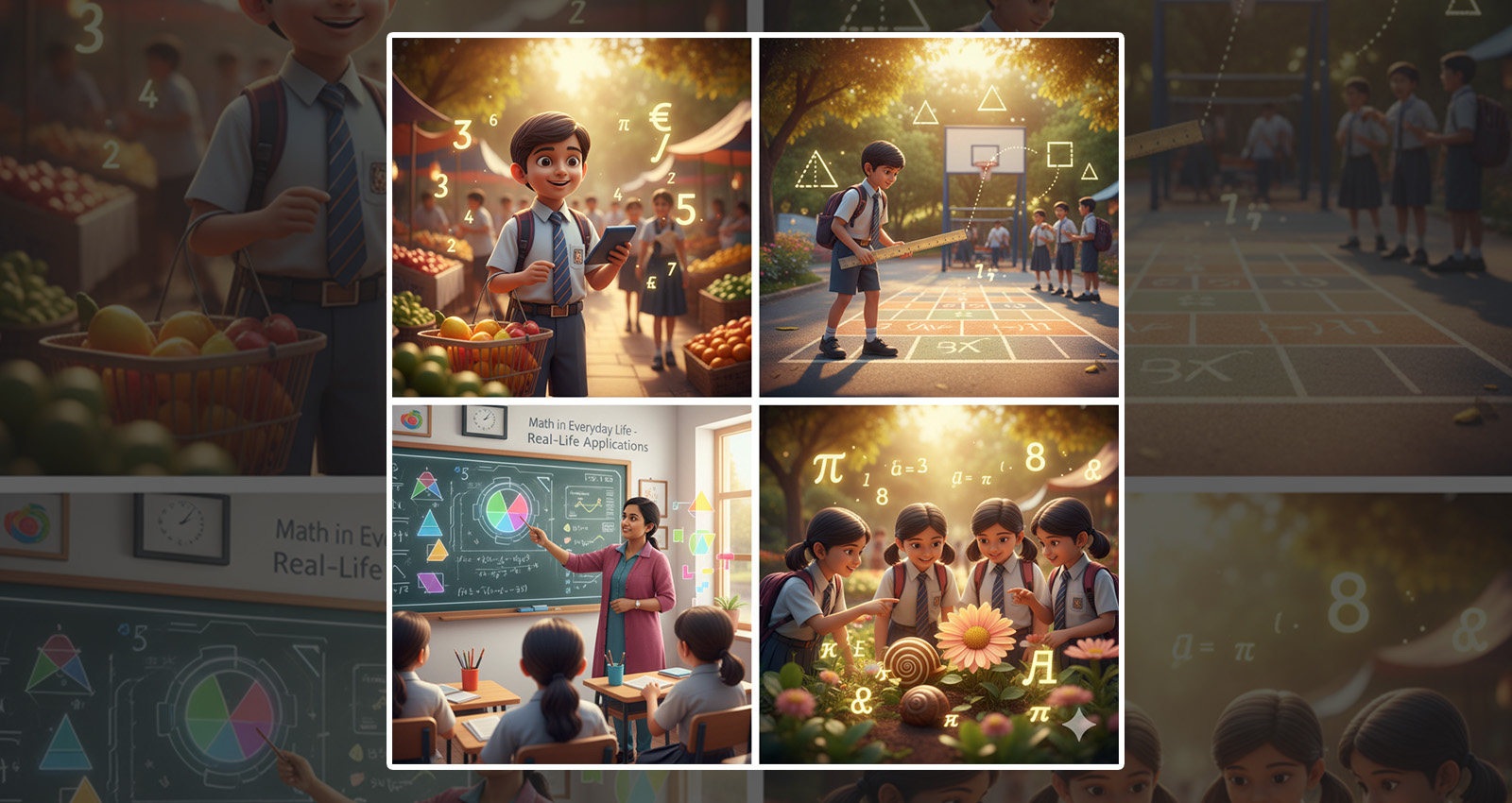
Everyday Situations Involving Maths
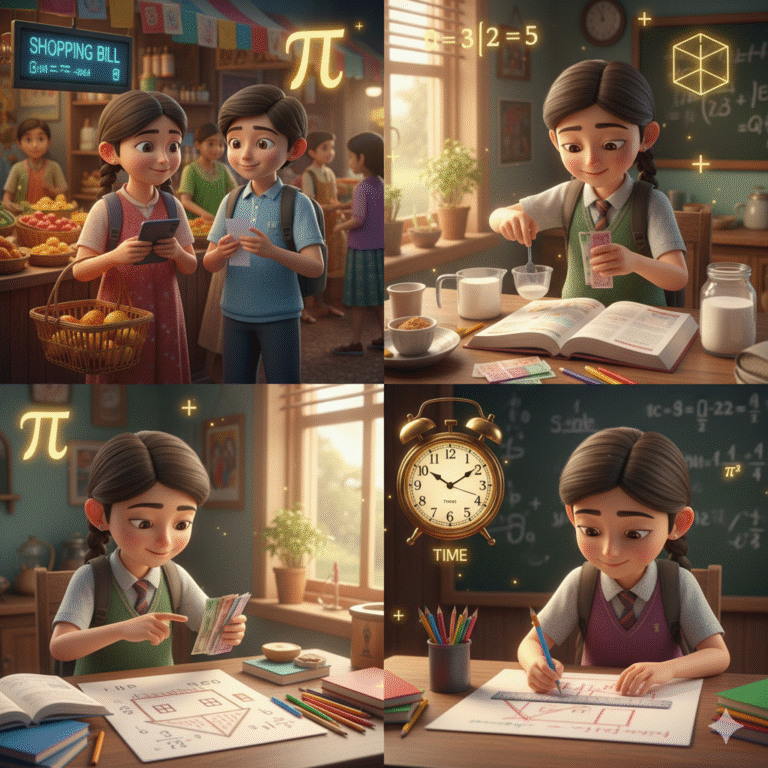
From the moment we wake up, maths becomes part of our routine. We check the time, calculate how long we can sleep, and estimate how many minutes we have left to get ready. Later, we might calculate bus arrival times, track the number of steps we’ve walked, or work out how much battery our phone has left.
Maths is also used while shopping, managing pocket money, or deciding how much to spend on snacks versus saving for a new game or outfit.
Maths in the Kitchen and at Home
At home, cooking is one of the most practical applications of maths. Measuring flour in grams or milliliters, adjusting ingredients to serve more or fewer people, or converting Celsius to Fahrenheit when reading a recipe — all involve maths.
Budgeting is another example. Families use maths to plan their monthly expenses, calculate bills, and save for future needs.
Maths in School and Careers
Every subject in school uses maths in some way. Science needs data analysis, graphs, and measurements. Geography involves reading scales on maps. Even subjects like music and art use maths through rhythm patterns, beats, symmetry, and geometry.
Professionally, almost every career uses maths — whether it’s engineering, medicine, sports, business, or design. Understanding statistics, managing time, or solving technical problems are all mathematical tasks.